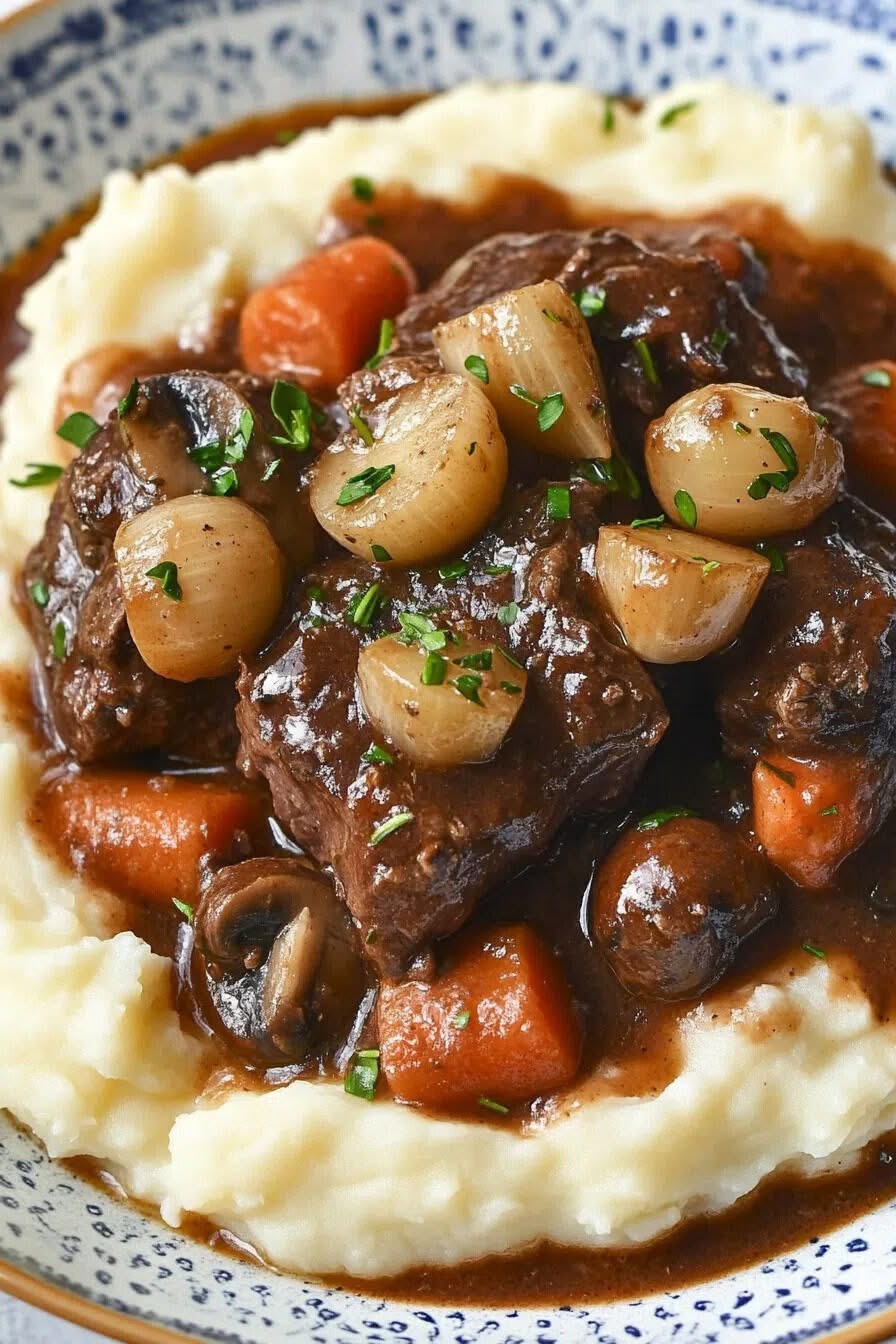
Beef Bourguignon Recipe and Complete Guide
Beef Bourguignon is one of the most iconic French dishes in the world. This slow-braised beef stew, simmered in a rich red wine sauce with onions, carrots, garlic, mushrooms, and herbs, has been a centerpiece of rustic French cuisine for centuries. It represents comfort food at its finest, blending deep flavors with melt-in-your-mouth tenderness. Today, it is beloved not only in France but also across the globe, thanks to its timeless flavor and its reputation as a dish that turns humble ingredients into something extraordinary. In this article, you will discover everything about Beef Bourguignon: its origins, ingredients, step-by-step preparation, cooking techniques, serving suggestions, variations, and expert tips to master it at home.
The History of Beef Bourguignon
Beef Bourguignon, also called Boeuf à la Bourguignonne in French, originates from the Burgundy region of France. Burgundy is famous not only for its stunning landscapes but also for its wine and cattle. The region’s culinary tradition naturally combines these two products: beef from Charolais cattle and Burgundy red wine. Originally, Beef Bourguignon was considered a peasant dish. Farmers and rural families needed a way to transform inexpensive and tough cuts of beef into nourishing meals. Slow cooking over low heat in wine and broth was the perfect solution. This long braising process softened the meat while infusing it with the complex flavors of red wine and aromatic vegetables. Over time, what began as rustic country cooking became celebrated by French chefs, eventually gaining a place in fine dining restaurants and home kitchens alike.
The Influence of French Cuisine
French cuisine is built on tradition, technique, and patience. Beef Bourguignon embodies these principles. It shows how simple ingredients, when treated with respect, can be transformed into an elegant dish. Julia Child, the legendary chef who introduced French cooking to America, played a huge role in popularizing Beef Bourguignon in the English-speaking world. In her book “Mastering the Art of French Cooking,” she included Beef Bourguignon as one of the recipes that best represents French culinary culture. Since then, it has become a household name, cooked in both Michelin-starred kitchens and ordinary homes.
Ingredients for Beef Bourguignon
The beauty of Beef Bourguignon is in its carefully chosen ingredients. Each component contributes to the final flavor. Below is a detailed breakdown of the essentials and possible substitutions.
Beef: Traditionally, a tough cut like chuck roast, brisket, or short ribs is used. These cuts have connective tissue that breaks down beautifully during long, slow cooking, resulting in tender meat full of flavor. Lean cuts should be avoided because they dry out during braising.
Wine: Red wine is the soul of this dish. Burgundy red wine is classic, but Pinot Noir, Merlot, or Cabernet Sauvignon also work well. The wine should be of good quality because it defines the sauce. Avoid using cooking wine; always choose a bottle you would also enjoy drinking.
Stock: Beef stock or broth balances the acidity of wine and adds depth. Some recipes use chicken stock for a lighter flavor, but beef stock creates a richer base.
Bacon or Lardons: Rendered bacon fat enhances the flavor of the stew and gives the sauce a smoky undertone.
Onions: Both pearl onions and chopped yellow onions are commonly used. Pearl onions provide sweetness, while larger onions melt into the sauce.
Garlic: Adds aroma and depth to the sauce.
Carrots: Provide natural sweetness and complement the earthy richness of beef.
Mushrooms: Traditionally sautéed in butter and added toward the end of cooking. Their earthy taste blends with the sauce.
Tomato Paste: Used to intensify color and flavor.
Herbs: Bay leaves, thyme, and parsley are common. A bouquet garni can also be used for authentic French cooking.
Butter and Flour: These create a roux or help thicken the sauce.
Step-by-Step Guide to Cooking Beef Bourguignon
Cooking Beef Bourguignon requires patience and attention, but it is not overly complicated. Here is a complete guide to making it at home.
Step 1: Preparing the Ingredients
Cut the beef into large cubes, around 2 inches each. Pat dry with paper towels to ensure proper browning. Chop carrots into chunks, slice mushrooms, and peel pearl onions. Mince garlic cloves. Preheat oven to 325°F (160°C).
Step 2: Browning the Beef
In a heavy-bottomed Dutch oven, cook diced bacon until crispy. Remove the bacon and keep the fat in the pot. Sear beef cubes in small batches, making sure each side is well-browned. Avoid overcrowding the pot. Remove beef and set aside.
Step 3: Cooking the Aromatics
In the same pot, sauté onions and carrots until slightly caramelized. Add garlic and cook briefly. Stir in tomato paste and cook for one minute to concentrate flavor.
Step 4: Deglazing with Wine
Pour in the red wine, scraping up any browned bits stuck to the bottom of the pot. This step adds immense flavor. Allow the wine to simmer for about 10 minutes to reduce slightly.
Step 5: Building the Sauce
Return beef and bacon to the pot. Sprinkle flour over the mixture and stir well. Add beef stock, bay leaves, and thyme. Season with salt and pepper. Cover the Dutch oven and transfer to the oven.
Step 6: Braising
Cook for 2 ½ to 3 hours in the oven, until beef is fork-tender. Stir occasionally and check the liquid level, adding stock if necessary.
Step 7: Preparing the Garnish
In a skillet, sauté mushrooms in butter until golden brown. In another pan, caramelize pearl onions until lightly browned. Add both to the stew during the final 30 minutes of cooking.
Step 8: Serving
Remove bay leaves and adjust seasoning. Garnish with fresh parsley. Serve hot with mashed potatoes, buttered noodles, or crusty bread.
Variations of Beef Bourguignon
The traditional recipe is timeless, but variations allow for creativity and convenience. Some of the most popular include:
Slow Cooker Beef Bourguignon: Ideal for busy days. After browning beef and vegetables, transfer everything to a slow cooker and cook on low for 8 hours.
Instant Pot Beef Bourguignon: A faster version. Pressure cook the beef for about 45 minutes after browning, then finish with sautéed mushrooms and onions.
Vegetarian Bourguignon: Replace beef with mushrooms, lentils, or root vegetables. The same wine-based sauce works beautifully.
Chicken Bourguignon: Substitute beef with chicken thighs. Reduce braising time to 1 ½ hours.
Shepherd’s Pie Style: Use Beef Bourguignon as a filling for a mashed potato topping, creating a French-inspired casserole.
Serving Suggestions
Beef Bourguignon pairs wonderfully with simple sides that allow the flavors of the stew to shine. The most traditional options include creamy mashed potatoes, egg noodles, or crusty French bread. Each absorbs the sauce differently, offering variety. Rice is also a good choice for a lighter pairing. For vegetables, roasted green beans or sautéed spinach provide freshness to balance the richness of the dish. A glass of red wine, ideally the same used in cooking, completes the meal.
Wine Pairing
Wine is not only an ingredient but also a partner for this dish. Red Burgundy is the traditional choice, but Pinot Noir, Syrah, or even Zinfandel pair beautifully. The goal is to choose a wine with enough body to complement the richness of the beef without overwhelming it. A well-structured wine enhances the dining experience, connecting the flavors of the sauce with the flavors of the drink.
Nutritional Information
Beef Bourguignon is a hearty meal, typically high in protein and iron due to the beef. It is also rich in vitamins A and C from carrots and onions. However, because of its use of butter, bacon, and wine, it can be high in calories. A standard serving with mashed potatoes can range from 500 to 700 calories, depending on portion size. To lighten the dish, use leaner cuts of beef, less bacon, or substitute part of the wine with extra broth.
Tips for Making Beef Bourguignon Perfect
Dry the beef before browning to achieve a proper crust. This step is essential for deep flavor.
Do not skip the wine reduction step. It concentrates the flavor and removes harshness.
Cook low and slow. The tenderness of the meat depends on time, not high heat.
Add mushrooms and pearl onions at the end for the best texture.
Make it ahead. Beef Bourguignon tastes even better the next day because the flavors develop overnight.
Freeze leftovers in airtight containers for up to three months. Reheat slowly on the stove for best results.
Frequently Asked Questions
Can I make Beef Bourguignon without wine? While wine is central to the dish, you can substitute with beef stock and a splash of balsamic vinegar. The flavor will be different but still delicious.
What cut of beef is best? Chuck roast is the most recommended because it is affordable and flavorful. Brisket and short ribs are also excellent.
How do I thicken the sauce? You can add a slurry of cornstarch and water at the end or increase flour during cooking.
Is Beef Bourguignon gluten-free? It can be made gluten-free by replacing flour with cornstarch or gluten-free flour.
Can I use white wine? While not traditional, white wine creates a lighter sauce. This is sometimes called Coq au Vin Blanc when made with chicken.
Conclusion
Beef Bourguignon is not just a recipe; it is a story of French tradition, patience, and culinary artistry. From its humble origins in Burgundy to its global fame today, it represents the beauty of slow cooking and the power of simple ingredients transformed by time. Making Beef Bourguignon at home brings a piece of French heritage into your kitchen. Whether served for a family dinner or a special occasion, it never fails to impress. By following the steps and tips outlined in this guide, you can master this dish and enjoy its timeless flavors anytime you wish.